Septic Tank Frozen or Sluggish in a Hard Freeze? What's Happening
Quick Answer: A septic tank rarely freezes solid overnight. What usually happens first is that cold temperatures slow down the bacteria breaking down solids in the tank, so drains get sluggish before anything actually freezes. If a hard freeze continues, ice can form in one of four specific spots: the pipe from the house to the tank, the tank itself, the pipe running out to the drainfield, or the drainfield soil. Gurgling drains, a slow-to-flush toilet, and standing water over the yard in freezing weather are the signals that something in that chain has gone from sluggish to blocked, and the fix depends entirely on where the freeze actually is.
You flush the toilet on a sub-zero morning and it takes three tries to clear. The shower drain gurgles. By evening, water is backing up into the tub whenever someone runs the washing machine. Nothing looks wrong outside. No puddles, no smell, just a system that has quietly stopped keeping up.
In a Central New York winter, this is one of the more confusing septic problems homeowners run into, because "frozen" and "sluggish" get treated like the same thing when they are really two different stages of one cold-weather problem. Knowing which stage you're in changes what happens next. A sluggish system caused by cold-slowed bacteria is not the same crisis as an actual ice blockage sitting in a pipe. Here's what's happening underground when a hard freeze hits, why sluggish almost always shows up before frozen, and where a technician looks first.
Sluggish Isn't the Same Problem as Frozen
A septic tank works because bacteria inside it are constantly breaking down solids into a form the system can handle. That bacterial activity slows down as the temperature of the wastewater drops, and in a deep cold snap it can slow down considerably. Less breakdown means solids accumulate faster relative to how much the tank can process, which pushes the tank closer to full and makes drains act sluggish well before any ice has formed anywhere in the system.
This is the stage most homeowners hit first during a hard freeze. Drains are slow, toilets take a second flush, but there's no hard blockage yet. Just a tank working at reduced capacity. If the cold snap breaks or usage patterns change, the bacteria recover and drains loosen back up on their own within a few days.
Frozen is a different animal entirely, mechanical instead of biological. Ice physically blocks a pipe or fills a section of the tank or drainfield, and no amount of waiting for bacteria to catch up fixes that. Wastewater simply has nowhere to go until the ice is dealt with directly.
The Four Places a System Actually Freezes
When a septic system does freeze, it happens in one of four specific locations, not everywhere at once. Knowing which one is affected is most of the diagnosis.
The Pipe From The House To The Tank
This line needs steady downhill slope to keep waste moving. If it settles, sags, or was installed without enough fall, water sits in the low spot instead of draining through, and that standing water is what freezes first. A leaking fixture inside the house can cause the same problem by sending a slow, thin trickle down the line all winter, and thin trickles freeze faster than a full flush volume.
The Septic Tank Or Pump Tank
Tanks buried shallow, or ones with an uninsulated riser or lid sitting close to grade, lose heat fast in extended cold. A pump tank with a stuck check valve or no working weep hole is especially prone to freezing, because effluent that should drain back into the tank between pump cycles gets stranded in the line instead.
The Pipe Running Out To The Drainfield
Same mechanics as the house-to-tank line. Any sag, any low spot, any spot where water pools instead of flowing keeps that water in contact with cold soil long enough to freeze solid.
The Drainfield Or Soil Treatment Area Itself
This is the toughest to fix. If the field was already struggling, saturated soil, a failing baffle, standing water, before the cold hit, that excess moisture freezes and blocks the soil from accepting anything further. A field that was working fine going into winter rarely freezes on its own.
What Turns an Ordinary Cold Snap Into a Freeze-Up
Central New York gets long, hard stretches of freezing weather most winters, and a handful of conditions decide whether a system just runs sluggish or actually freezes solid.
Snow Cover, Or The Lack Of t
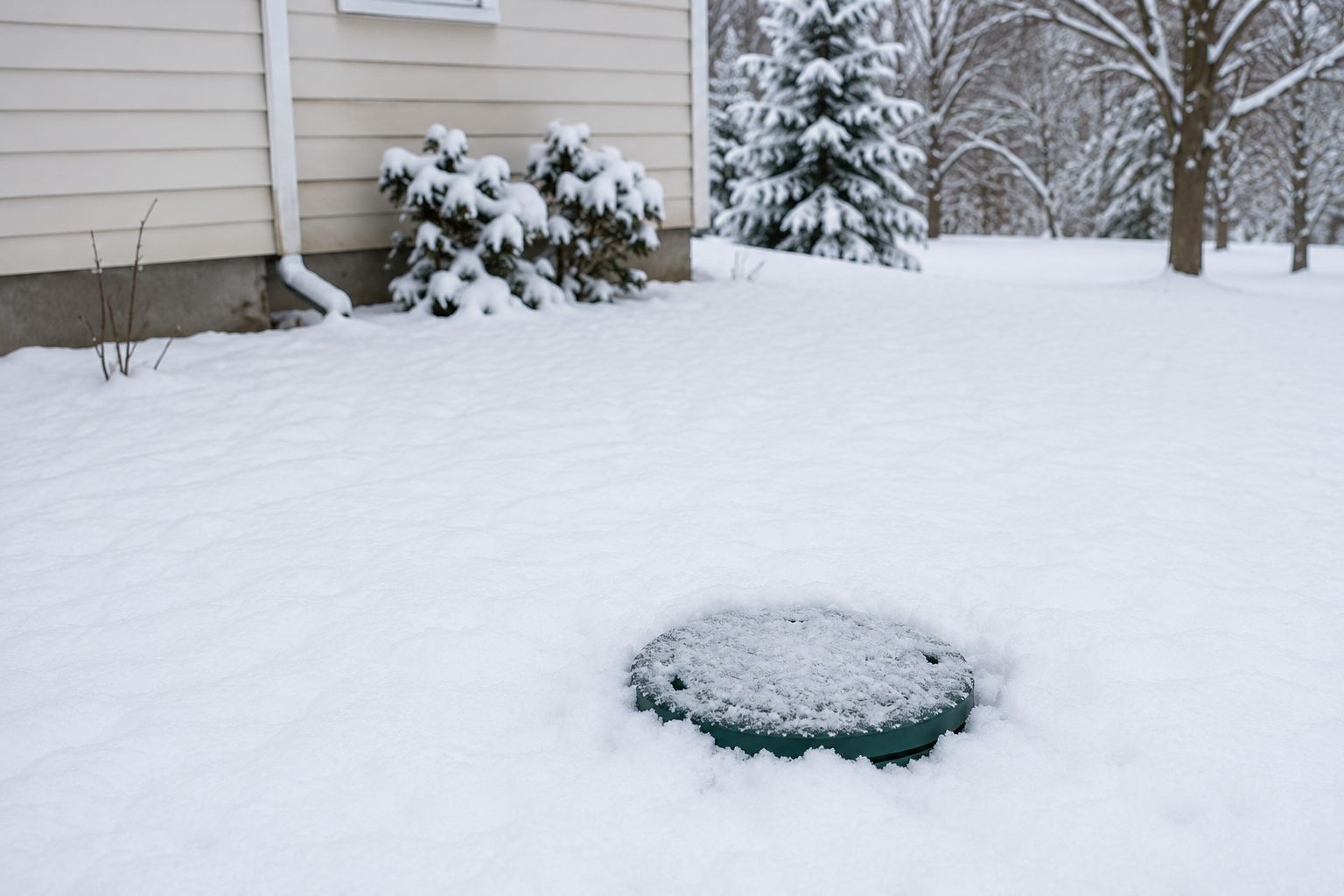
Snow acts as an insulating layer over the tank and drainfield, trapping the low-level heat coming up from the wastewater and the soil beneath it. A winter with little snow lets frost drive much deeper into the ground than usual, which is one of the more common reasons a system that never froze before suddenly does.
Compacted Snow And Soil
Snow that gets driven over, walked across regularly, or plowed onto the system loses most of its insulating value and actually pushes frost deeper instead of blocking it. Any area over the tank or drainfield that sees regular vehicle or foot traffic carries higher risk.
A Leaking Fixture Or High-Efficiency Furnace
A dripping toilet, a slow faucet, or condensate from a high-efficiency furnace all send small, steady trickles of water into the system. That thin, slow-moving water freezes far more easily inside a pipe than a normal flush volume does.
Light Or Irregular Household Use
A part-time home, a vacant rental, or a household away for a stretch sends less wastewater through the system, which means less warmth moving through the pipes and tank to keep temperatures up.
Open Or Uncapped Access Points
A cracked riser lid, an uncapped inspection pipe, or a manhole cover that doesn't seal lets cold air pour directly down into the tank, working against whatever heat the system is generating on its own.
Tip: Let the grass over your tank and drainfield grow a little longer in the fall before you stop mowing for the season. The extra length traps snow more effectively, and that trapped snow is free insulation for the system all winter.
Reading the Signs Correctly
Not every winter drainage problem is the same problem, and the signs point in different directions depending on what is actually going on underground.
Gurgling drains and a slow-flushing toilet with no backup yet usually point to the sluggish, bacteria-slowed stage. Multiple fixtures backing up at once, especially the lowest drain in the house, points to an actual blockage somewhere in the line or tank. A frosty, hard patch of ground over the tank or field that looks different from the surrounding yard can indicate the soil itself has frozen. Water pooling on the surface over the drainfield in freezing weather is a sign the field cannot accept anything further, which is a more serious situation than a sluggish tank and needs a professional look before it gets worse.
None of these signs tell you exactly where the problem sits on their own. That's usually determined with a camera run down the line, which shows a technician exactly where flow stops and whether the cause is ice, a sag in the pipe, or something else entirely, like a failing baffle that just happens to act up at the same time as the cold snap. It's easy to blame the weather for everything once temperatures drop, but a lot of "frozen" calls turn out to be an older problem that finally got pushed over the edge by the cold.
Why the Snow Belt Makes This a Bigger Deal
A hard freeze in Central New York doesn't last a day or two, it can settle in for weeks, and that duration is what separates a minor slowdown from an actual freeze. The longer the ground stays below freezing, the deeper the frost line pushes, and the more likely it becomes that a marginal pipe slope or a shallow tank finally gives out. Homes on septic in Cicero, Syracuse, and the surrounding lake-effect snow belt deal with this every winter, which is exactly why the systems that hold up best are the ones where snow cover was left alone, access points are sealed, and any small drainage issue got caught back in the fall before the cold set in for good.
What Happens When a Technician Gets Called Out
A frozen or badly sluggish system in a hard freeze gets handled differently than a routine service call, because digging and pumping both work against you in the cold.
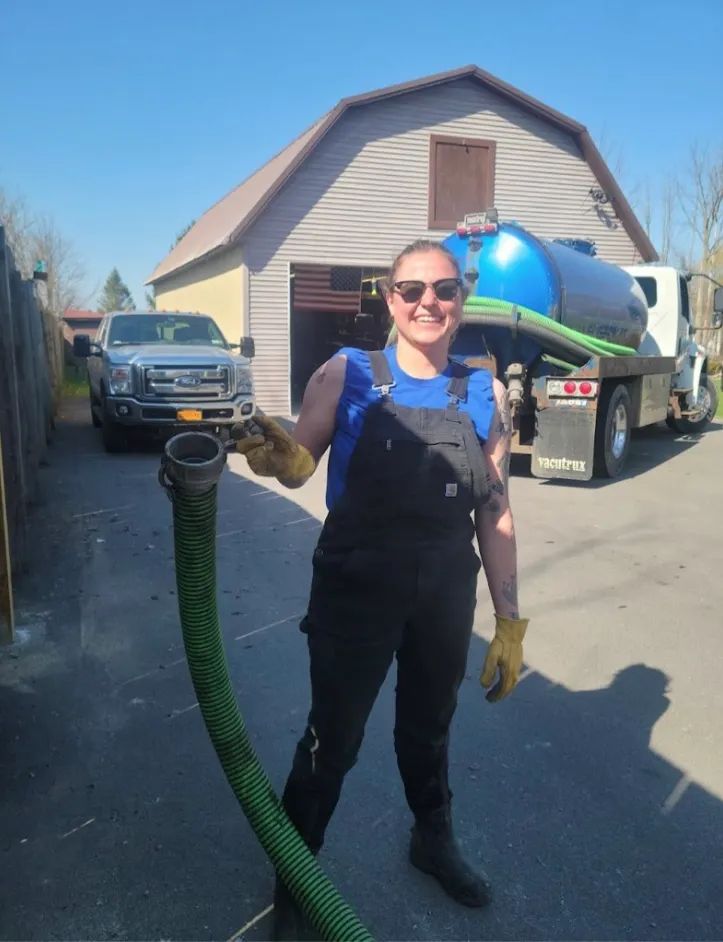
A technician typically starts by running a camera down the line to find exactly where flow is stopping. If ice is confirmed in a pipe, the fix is controlled heat, not brute force. Steamers and high-pressure jetters both work by applying warm water or steam directly into the frozen section until it clears, and that has to be done carefully to avoid cracking a pipe that is already under pressure from the ice inside it. If the tank itself has iced over, thawing it in place and checking the baffles once it clears is the next step, since ice can sometimes shift or damage them.
Pumping a tank in the depths of winter is generally avoided unless there's a real emergency, because a lid buried under frozen ground is difficult to reach and an emptied tank refills slowly in the cold, leaving it exposed to freezing again before normal use catches up.
Warning: Never pour antifreeze, salt, or any additive into a septic system to try to thaw it, and never run water continuously in an attempt to melt an ice blockage. Both can overload the tank, damage the system, or push the problem further into the drainfield, and neither actually clears the ice.
Frequently Asked Questions
What's the difference between a sluggish septic tank and a frozen one in winter?
A sluggish system has reduced wastewater flow, while a frozen system has an ice blockage in a pipe, tank, or drainfield. Sluggish conditions may improve naturally, while freezing requires professional attention.
Can a septic tank actually freeze solid?
Yes, although pipes freeze more commonly. Shallow tanks, poorly sealed risers, and prolonged freezing temperatures increase the risk. Standing water in sagging pipes often freezes before the septic tank itself does.
Why do my drains gurgle only during cold snaps?
Cold weather can restrict wastewater movement through septic pipes and components. Gurgling may indicate developing ice, poor drainage, or another blockage, especially when accompanied by slow toilets, drains, or household backups.
Does snow help or hurt a septic system in winter?
Undisturbed snow helps insulate septic tanks, pipes, and drainfields from extreme cold. Compacted or removed snow provides less protection, allowing frost to penetrate deeper and increasing the likelihood of winter freezing.
Is it safe to keep using water if my septic system seems frozen?
Limit water use if you suspect a frozen septic system. Continuously running warm water can overload the tank or worsen backups, so professional inspection is recommended when normal wastewater flow becomes restricted.
How long does it take to thaw a frozen septic line?
Thawing time depends on the location and severity of the freeze. A small pipe blockage may clear within hours, while a deeply frozen drainfield could require weeks of warmer weather to recover.
Keeping Your Septic System Moving Through Winter
A sluggish septic system during a hard freeze does not always mean something has frozen solid. Cold temperatures, reduced bacterial activity, poor pipe slope, compacted snow, or exposed access points can gradually affect normal flow. Recognizing these warning signs early makes it easier to distinguish a temporary winter slowdown from an actual ice blockage. For homeowners in Syracuse, NY, understanding how cold weather affects each part of the system can also prevent unnecessary assumptions when drainage suddenly changes during winter.
With 15
years of experience, C Mattes Inc
understands how prolonged Central New York freezes can affect septic tanks, connecting pipes, and drainfields differently. Paying attention to gurgling drains, slow toilets, unusual surface water, and recurring backups provides useful clues about what may be happening underground. Keeping access points sealed, avoiding traffic over the drainfield, and preserving natural snow insulation can further reduce winter problems, helping residential and commercial septic systems remain dependable throughout extended periods of freezing weather.